
The web is becoming smarter, faster, and more automated, and so should your approach to accessibility. Artificial intelligence (AI) is no longer a futuristic add-on; it’s reshaping how websites achieve and maintain accessibility compliance. But even as AI web accessibility tools grow more advanced, expert guidance remains essential to using them effectively.
In this guide, Equally AI’s AI web accessibility experts share their best recommendations for combining human insight with AI-powered web accessibility solutions to make your website inclusive, compliant, and future-ready.
Web Accessibility and AI: The What and the Why?

According to the CDC, 1 in 4 people in the US live with a disability, and a WHO report shows that 16% of the world’s population lives with significant disability. This means that accessibility has to be taken seriously, including web accessibility.
Web accessibility is the state of having websites and web content that are accessible to people with disabilities. Basically, it’s a way to facilitate access to the internet by individuals who have temporary, permanent, or situational impairments.
To help unify and optimize the process of web accessibility, the World Wide Web Consortium (W3C) developed the Web Content Accessibility Guidelines (WCAG). A set of guidelines for web developers and web authors to follow for developing accessible digital content.
Today, AI accessibility tools help automate much of that process, making compliance faster and more scalable. Still, human expertise is crucial for interpreting context, testing user experiences, and ensuring that your site goes beyond mere compliance to genuine inclusivity
AI for web accessibility combines machine learning, computer vision, and natural language processing to make websites more inclusive. Tools like Equally AI automate captions, alt text, sign language translation, voice navigation, and compliance checks, while human oversight ensures sites are fully accessible, compliant, and user-friendly for all.
How Artificial Intelligence Is Used in Web Accessibility

Artificial Intelligence is transforming the accessibility landscape, and AI technologies like machine learning, natural language processing, and computer vision can now identify accessibility gaps, suggest corrections, and even adapt user experiences in real time.
Here are some of the key ways AI supports web accessibility today:
AI Web Accessibility Solutions

AI-powered automated solutions continuously monitor and remediate accessibility issues across websites. They can scan for WCAG compliance, detect missing alt text, identify keyboard navigation barriers, and fix errors in real time, saving teams countless hours of manual testing.
Equally AI’s automation, for example, brings websites up to WCAG 2.1 Level AA standards with just one line of code, while keeping them compliant as content evolves.
Automated Captioning and Transcription
AI tools automatically generate captions and transcripts for videos, podcasts, and live events, making multimedia content more accessible to people who are deaf or hard of hearing. Platforms like YouTube and Netflix use AI-driven captioning to provide accurate subtitles and audio descriptions that improve comprehension for diverse audiences.
Speech Recognition and Voice Navigation
For individuals with mobility challenges or limited dexterity, AI-powered speech recognition enables full website navigation through voice commands.
Users can use tools like Voice Pilot and Speak2Web to search, type, and interact with web elements hands-free.
Image Recognition and Object Detection
AI can interpret visual elements by identifying objects and scenes within images, generating descriptive alternative text for screen readers.
This helps users who are blind or visually impaired understand non-text content. For instance, accessibility platforms like Equally AI and others leverage image recognition to automate and improve alt text accuracy.
Real-Time Sign Language Translation
AI-driven translation tools like Signapse and ASLMagic, and others, can convert written or spoken text into Sign Language videos, bridging communication gaps for people who are deaf and primarily use sign language. These systems enhance inclusivity by providing visual language accessibility online.
Adaptive User Experiences
The advancement of AI has allowed platforms to create personalized digital experiences to meet different accessibility needs.
AI-powered tools, like Equally AI’s AI-powered web accessibility solution, allow users to personalize their experiences to suit their preferences. From adjusting color contrast and text size to activating focus modes for users with ADHD.
Live Assistance and Virtual Support
Chatbots and AI assistants can guide users through websites, helping them locate content, fill out forms, or access customer support more easily. These features improve both accessibility and usability for all users, including those with cognitive or learning disabilities.
In Q1 2025, only 5 % of websites tested (for blind/low-vision usability) were found to be fully accessible; ~64 % were deemed inaccessible
7 Expert Tips for Using AI for Web Accessibility
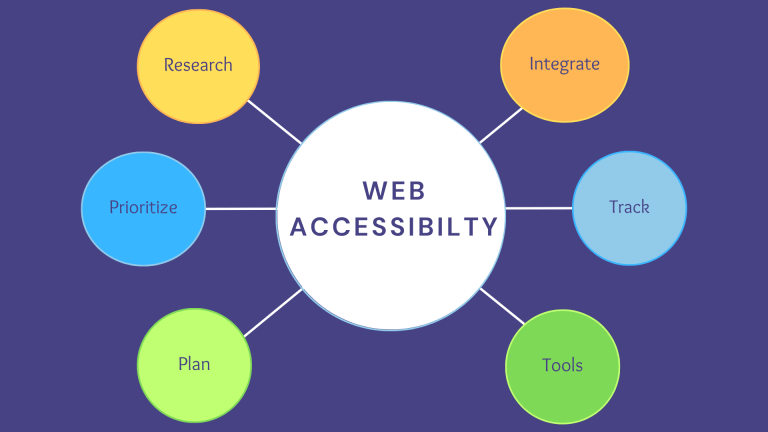
1. Start With Research and Understanding
Before implementing any AI web accessibility tools, invest time in understanding accessibility fundamentals. Learn from people with disabilities, study WCAG principles, and explore assistive technologies like screen readers.
If you have a deep understanding of web accessibility, you can address issues more effectively.
2. Prioritize High-Impact Improvements First
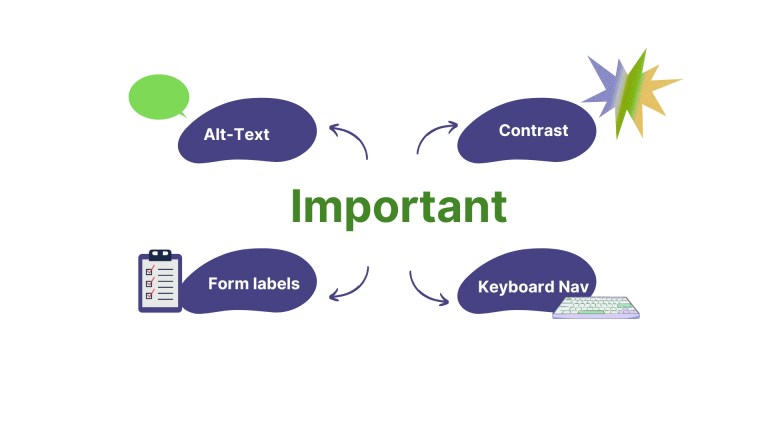
When improving your website’s accessibility, not all fixes have the same impact. Some accessibility recommendations should be considered before others. AI can help you identify critical issues, like missing alt text, poor color contrast, or non-keyboard-accessible menus, and then suggest improvements.
In a survey by Webaim of one million homepages 81% had low-contrast text and 54.5% had missing alt text for images, emphasising that some of the biggest usability wins are basic fixes like contrast and alt text.
When you can, start with the changes that will most improve usability for visually or motor-impaired users. These quick wins can transform both your user experience and brand perception.
3. Set Measurable Goals and Accessibility Milestones
AI can track compliance progress, but you need clear goals. Determine which issues need to be addressed and set achievable milestones, for instance, reaching WCAG Level A compliance within six months and Level AA within 18 months.
Ensure to keep an eye out for any legislation and deadlines that might affect your strategy, and plan accordingly.
4. Build Accessibility Into Your Company Policy
Accessibility shouldn’t be a one-time project. Develop a policy framework that integrates accessibility into every process, from procurement to publishing.
AI tools can automate compliance checks across departments, flagging inaccessible PDFs or media uploads in real time. But embedding accessibility into culture ensures lasting change.
5. Stay Updated With Evolving Technology and Changes

Web technologies evolve quickly, and so do accessibility standards. As your CMS or authoring tools release updates, explore new accessibility features that keep up with them.
Also, ensure that you use tools that update your resources and websites to accommodate the changes in Web Technologies as advancement happens.
And even when using the right tools, be sure to track functionality that changes with each version and consider what technologies you intend to support. List your base browsers, assistive technologies, and the authoring tools you use.
An AI-driven system like Equally AI continuously updates to align with modern browsers, frameworks, and WCAG versions.
6. Focus on a Seamless User Experience
With web accessibility, there is the tendency to overcomplicate things for your website visitors. Ensure to opt for tools that provide a simplified experience.
Accessibility shouldn’t come at the expense of usability. A well-integrated AI-powered accessibility solution personalizes the experience for users without cluttering the interface.
7. Use The Best Tools for Continuous Accessibility Compliance
Manual testing is essential, but automation accelerates it. AI web accessibility tools scan your site, detect compliance issues, and fix many of them in real time.
Web accessibility solutions can save you the hassle of constantly needing to review and repurpose different layers of your website as you scale your business.
With Equally AI’s web accessibility solution, one line of code can bring your website up to WCAG 2.1 Level AA standards, without complex installations or hidden costs.
Want to explore AI-powered web accessibility?
Do We Still Need Humans?
AI simplifies accessibility, but expertise gives it direction. Studies show that automated tools can detect only about 30% of WCAG 2.1 issues.
By combining automated tools with human insight, you can ensure your website is compliant, inclusive, and aligned with the intent of ADA accessibility laws.
Web accessibility powered by AI is not just about compliance; it’s about creating digital spaces where everyone can participate fully.