

The Americans with Disabilities Act (ADA) was instituted in 1990 to protect people with disabilities from discrimination. This resulted in the creation of wheelchair ramps, handicapped parking spaces, the use of service animals, and more.
However, many people are unaware of how ADA compliance affects the web (including websites and web apps).
Understanding ADA website compliance cost is crucial for businesses, as it covers audits, remediation, and ongoing maintenance.
What is ADA Website Compliance?
Before breaking down the ADA website compliance cost, it’s important to understand what ADA website compliance actually means and why it matters. ADA website compliance refers to practices that help ensure web content is accessible to people with disabilities, such as enabling screen reader usability for visually impaired users.
Title III of the ADA prohibits discrimination by businesses that are public accommodations, and many courts and the Department of Justice interpret this to include websites that offer goods or services to the public online, even if they do not have a physical location. However, legal interpretations vary by jurisdiction, and there is still no explicit ADA rule solely for private websites.
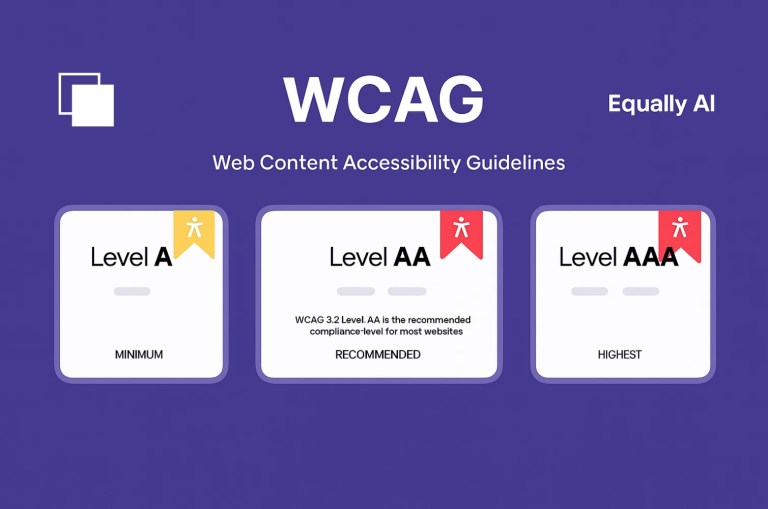
In the absence of a federal ADA regulation that specifically mandates a technical standard for all websites, the Web Content Accessibility Guidelines (WCAG) 2.1 serve as the de facto benchmark for accessibility, with Level AA widely referenced in lawsuits and guidance. WCAG measures compliance at three levels – A (minimal compliance), AA (acceptable compliance), and AAA (optimal compliance).
Suggested Reading: WCAG 2.0 vs 2.1 (8 Things You Should Know About WCAG)
Do Websites Legally Have to Comply with ADA?
As mentioned earlier, many websites are considered public accommodations under Title III of the ADA, which prohibits discrimination against people with disabilities.
While the courts are split between requiring a physical location for the law to apply and extending ADA obligations to online-only businesses, in the cases where it does apply, websites are legally required to be accessible.
They are required to provide accessible experiences that allow all users, including those with disabilities, to access content, navigate the site, and use services equally. Following recognized standards, such as the WCAG, helps ensure compliance and reduces legal risk.
ADA Compliance Checklist You Must Comply to
Here are some of the requirements your website must meet to be compliant:
- Your website should be accessible via keyboard navigation
- All hyperlinks should have a descriptive anchor text
- All pages on your website have “skip navigation” links
- All the text content should be structured using proper heading tags
- The color contrast of your web pages should be sufficient according to WCAG
- All videos should have subtitles, transcripts, and audio description
- Online forms should have descriptive HTML tags
- Heading or title should be readable and presented in a logical order
- Make sure, and ‘b’ or ‘i’ HTML tags are replaced with ‘strong’ and ’em’
- The presentation should have more than just color alone and convey information clearly.
- The site is navigable via keyboard, and the keyboard does not get stuck on any page elements.
- No strobing light or rapidly flashing lights or colors are used in the website design
- Links and buttons are clearly labeled and named logically
- The language of every page is identifiable in code
- Forms are labeled and have legends that are easily read by screen reader software
Benefits of ADA Compliance to Your Business
Many website owners fixate on ADA website compliance cost alone because they don’t understand the benefits it brings to their business.
People with disabilities are not the only ones who benefit from compliance with the web accessibility standards defined by the Americans with Disabilities Act.
Organizations and businesses that fail to comply with the ADA guidelines are at risk of lawsuits that result in them being fined heavily. Aside from heavy fines, this also affects their brand negatively.
It is in every business’s best interest to adhere to the government requirements to avoid any potential legal or financial consequences in the future.
While compliance prevents businesses from losing money, another advantage is that it helps them potentially make even more money. ADA compliant businesses are better positioned to capture an often discriminated and neglected market of potential customers.
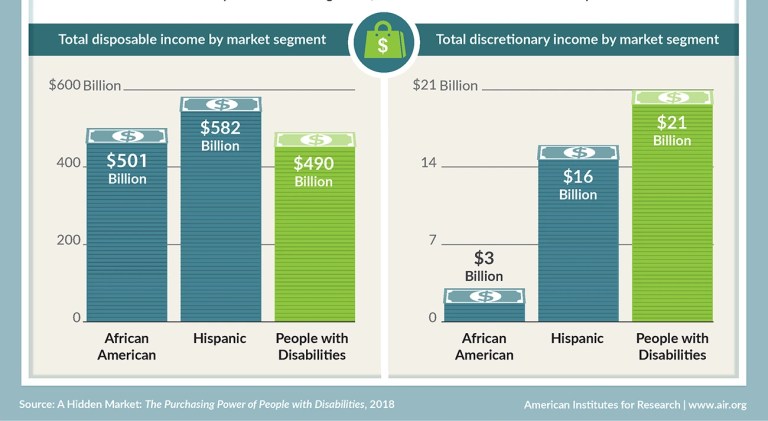
According to a report by the American Institute for Research (AIR), people with disabilities have a total disposable income of $490 billion. Catering for them can result in larger profit margins for businesses.
Also, ADA-compliant websites get better SEO and organic search engine traffic. ADA compliance is a win-win situation for companies and potential customers.
What Is the Penalty for ADA Website Compliance Violations?
Failing to make a website accessible to people with disabilities can carry serious legal consequences. Businesses have faced lawsuits resulting in settlements, fines, and court-ordered remediation that can range from thousands to hundreds of thousands of dollars, depending on the size of the company and the extent of non-compliance.
Beyond the financial penalties, non-compliant websites risk reputational damage. Negative publicity and poor user experiences can erode trust, alienate potential customers, and limit market reach.
When factoring in these penalties and the long-term impact on brand perception, user experience, and overall business health, the cost of ADA non-compliance becomes more concerning than the cost of investing in ADA compliance.
How Much Does ADA Website Compliance Cost?
There’s no one-fits-all answer when it comes to the cost of ADA compliance. The process of developing and programming a website is a technical one that requires a team of experts and comprehensive planning. Moreover, each project has its own requirements. Generally speaking, these are the phases required:
Website Audit (Finding the faults)
ADA compliance begins with a web accessibility audit. You need an audit of your website to identify the issues that need to be addressed.
You can use free or paid auditing tools to scan your website. Unfortunately, automated testing can only detect around 30% of accessibility violations, sometimes less. Therefore, you will also need to perform manual auditing. If you do not have a team of developers, you would need the service of accessibility experts for the audit.
Website accessibility costs vary depending on the size and complexity of your website. A professional accessibility audit can range from around $1,500 to $5,500 for most business websites. Some audits are priced per page, typically $100 to $250 per page, while enterprise-level audits for larger or more complex sites can exceed $10,000.
Smaller audits for limited pages may start around $500, but these often include only partial testing and reporting.
Remediation (Fixing the faults)
Once the audit is complete, then the real work begins. The audit provides a comprehensive list of issues you need to fix, which helps you build a remediation roadmap. you can create a remediation roadmap.
If you have an internal development team that can fix the errors, great! If not, it’s best to hire the services of an accessibility expert.
The cost to remediate accessibility issues varies depending on the number of problems, site complexity, and how the website was built. Small to medium websites often spend several thousand dollars, while larger sites with extensive fixes can cost $20,000 or more.
Some providers charge $250 to $550 per page, while comprehensive services that include audit and remediation planning fall in the $3,000 to $20,000 range..
Fortunately, Equally AI offers very affordable plans starting from $27/month for a website with up to 1,000 pages. You might also want to have a look at the full list of accessibility pricing available.
Compliance Monitoring and Maintenance
Accessibility is a journey, not a destination. ADA compliance is an ongoing process and not a one-time thing.
As long as the ADA keeps getting updated to account for more accessibility needs and continue adding more content to your website, you will need to reevaluate your website for compliance continuously.
How Long Does It Take To Make a Website ADA complaint
The time required to make a website ADA-compliant depends on several factors, including the size of the site, the complexity of its design, and the number of existing accessibility issues. Small websites with straightforward layouts may only take a few weeks to audit, fix, and test, while larger websites or web applications with custom features and multiple pages can take several months to fully remediate.
The process typically involves a thorough accessibility audit, implementation of necessary fixes, and manual testing to ensure all users, including those with disabilities, can navigate the site effectively.
Different tools and service providers can significantly affect the timeline. Some automated solutions may quickly identify basic accessibility issues but miss more complex barriers, requiring additional manual work. Equally AI offers a streamlined accessibility audit and remediation process that can save time while covering a wide range of compliance requirements, making it a practical option for businesses looking to speed up the path to ADA compliance.
It is also important to remember that ADA compliance is an ongoing effort, as new content, updates, and features need to be continuously monitored and adjusted to maintain accessibility over time.
Should You Get an In-House Development Team?
A large aspect of creating accessible websites requires coding, meaning you will need the services of a programmer or web developer at one point or another.
Suppose you already have one working for you. In that case, that will save you the cost of using the service of accessibility audit teams to test and fix any accessibility issues that may exist on your website.
However, this does not mean you need an in-house team of developers. If you are building a software product, you need a development team to develop your product continually. However, if you have a simple website like a blog run by a small editorial team, getting a team of developers would be expensive and not in your best interest.
Is there a better alternative to paying for hefty fees to be ADA compliant?
You can escape paying the high costs of ADA compliance by accounting for accessibility at the beginning of your website development cycle.
Using the proper semantic HTML tags, adding alt texts to images, using the appropriate color contrasts are the things you should do while you build your website, not after.
One reason why companies often ignore accessibility is speed. They want to shorten their time-to-market as much as possible.
It is true that ensure your website is completely ADA and WCAG compliant, especially if new and custom components are being developed. However, the consequences of non-compliance will make the time you saved meaningless.
Civil Engineers ensure that the foundation of the building they are erecting is strong to avoid a collapse. Airplane Engineers ensure that everything in a plane is up to standard while building, not after, or the consequences would be catastrophic.
You also have to be proactive about ensuring your website is accessible.
Don’t be penny-wise and pound-foolish.
Most companies often don’t plan for accessibility or pay enough attention to it when developing their websites, and they end up paying (financially) for that heavily.
Equally AI Accessibility Compliance Pricing
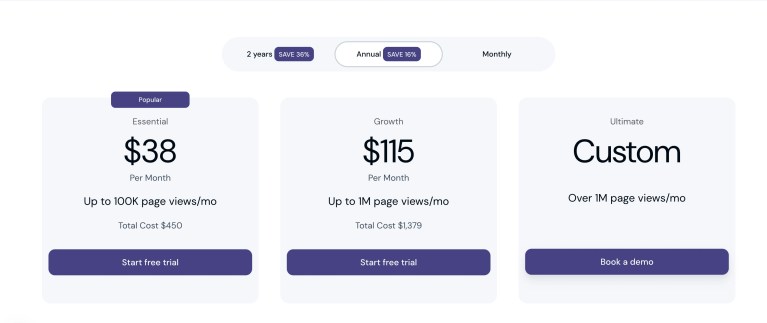
Equally AI offers clear, tiered pricing designed to fit a range of business sizes and accessibility needs. Its plans are based on monthly page views or feature sets and include key accessibility compliance features such as WCAG and ADA remediation, regular compliance checks, certified attorney accessibility statements, and notifications for critical code issues
The Essential plan starts around $38 per month or $450 per year and covers up to 100K page views monthly with core compliance features. Larger sites and higher traffic volumes move into higher tiers, including custom pricing for specific business needs.
Many plans also come with a free trial or a consultation to help you choose the right option. Compared to manual audits or hiring teams, which can cost thousands, Equally AI provides a more predictable subscription model for ongoing accessibility compliance.
Learn more about Equally AI Web Accessibility Solution pricing.
Conclusion
It is important that all individuals should be able to access the internet regardless of ability. It is basic human decency to provide the level of accessibility needed to create inclusive digital experiences and services.
Website Accessibility must not remain an afterthought of your development and design process. Neither should it be at the bottom of your to-do list.
It is in your best interest and your users’ best interests that your website is and remains accessible.